
Most people walk without thinking about how they do it. Yet the length of each step, the way the feet land and how the body shifts from side to side can say a lot about joint movement, muscle strength and balance. Changes in walking pattern often appear gradually, so they may go unnoticed until they start to affect daily activities. That said, in physiotherapy in Singapore, observing how a person walks is a common part of an assessment. Knowing what certain patterns may point to can help you decide when to have your mobility checked.
Short or Uneven Steps
Steps that are shorter on one side, or shorter overall than they used to be, can reflect several underlying issues. A physiotherapist may look into possibilities such as these:
- Stiffness in the hip, knee or ankle that limits how far the leg can swing forward.
- Pain on one side that causes the person to spend less time on that leg.
- Tight hip flexors or calf muscles, often linked to long periods of sitting.
- Reduced confidence in balance, resulting in cautious, shorter steps.
- Changes after an injury or surgery that have not fully resolved.
A Limp or Leaning to One Side
A limp, or a trunk that tilts sideways with each step, usually means the body is working around a problem. Some of the contributors that may be explored include the following:
- Weak hip muscles, which can cause the pelvis to drop on the opposite side.
- Pain in the hip, knee or foot that changes how weight is taken through the leg.
- A difference in leg length, whether structural or due to joint position.
- Lower back pain that alters how the trunk moves during walking.
Shuffling or Low Foot Clearance
When the feet barely leave the ground, the risk of tripping on uneven surfaces or kerbs increases. A physiotherapy clinic in Singapore may assess this pattern closely, as shuffling can be linked to the following:
- Reduced strength in the muscles that lift the foot and bend the knee.
- Stiffness in the hips or knees that limits leg movement.
- Neurological conditions such as Parkinson’s disease, which may need medical review.
- Fear of falling, which can make people keep their feet close to the ground.
- Footwear that is loose or slippery, encouraging a sliding step.
Foot Slapping or Dragging
A foot that slaps down onto the floor or drags at the toes can point to weakness in specific muscles or nerves. Possible causes that may be checked include these:
- Weakness of the muscles at the front of the shin, sometimes called foot drop.
- Nerve irritation from the lower back, such as in sciatica.
- Effects of a stroke or other neurological conditions.
- Nerve changes in the feet linked to long-term diabetes.
Wide or Unsteady Steps
People who walk with their feet set wide apart, or who sway and reach for walls or furniture, may be compensating for balance problems. A physiotherapist may consider factors such as these:
- Reduced sensation in the feet, making it harder to sense the ground.
- Inner ear problems that affect balance.
- Weakness in the hip and trunk muscles that help control side-to-side movement.
- Side effects of certain medications, which a doctor may need to review.
Slow Pace and Frequent Stops
Walking speed is often used as a general marker of mobility, particularly in older adults. A slower pace or the need to stop and rest may reflect issues such as these:
- Reduced leg strength or endurance after illness or inactivity.
- Breathlessness or heart conditions, which need assessment by a doctor.
- Joint pain from conditions such as knee osteoarthritis.
Turning Observations Into Action
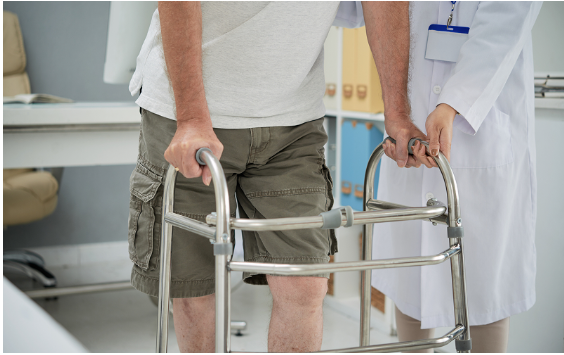
Noticing a change in how you or a family member walks is a reasonable prompt to seek an assessment. A physiotherapist can observe the pattern, test the movements involved and suggest exercises or aids, while a doctor can review any symptoms that point to a medical cause.
Noticed a change in how you or a parent walks? Message The Movement Laboratory to arrange a gait assessment today.